Quantcast
 
Picture
The Day my Cow was killed in a plane crash

Vic Savelli – FamilyRancher.com

If you told me when I was a college student in Pennsylvania decades ago that there would be a day in the future where I would receive a phone call from a small Texas airport to report that my cow had been killed in an airplane crash, I don’t think I would have believed it possible.  How could it be that I would end up in Texas, own a cow and why on earth would my cow be on an airplane in the first place? WELL IT HAPPENED and I actually DID receive that call; however the circumstances were a bit different than what you may think.

Career choices after college landed me in Texas and marriage kept me here.  Years later, following the passing of my in-laws, I found myself overseeing the East Texas land that they left to my wife.   This land was once a cattle ranch and pine tree farm, but for the past decade or so it had primarily been used as a hay meadow leased to a local rancher.   When he called to tell us that he did not want to lease it any longer I needed to find alternatives to keep the property active as agricultural use and keep the taxes down.  Believing that asking questions, doing research and gathering information is the best way to make decisions, I first called the Texas Forest Service who was willing to come out and visit the property and make suggestions.  Still a viable pine forest, they suggested that we thin certain pine trees, clear-cut others and they gave us a few suggestions on potential places to replant.  I then talked with The Texas A&M University office who suggested I “consider raising goats”.  I recall a conversation with one of their livestock professors who said that most Texans want cattle (because after all this is Texas) but that raising goats is more profitable and the demand was increasing.  It sounded interesting until in a conversation with an experienced old-timer I was told an anecdote that went something like this:  “You know when your fences are good enough to hold goats?”  I answered “No”.  He said, “You throw a bucket of water at the fence…if water can get through it then so can goats.”  I quickly dropped my interest in goats.  

Still searching for the right solution I called the original rancher that had leased the property and asked him if he knew any individuals that may be interested in cutting hay on the land or leasing it from my wife.  His response was “If I were in your shoes I would run cattle on it”.  He explained that “the pastures were tired” and that grazing cattle and adding their natural fertilizer to the soil would be an easy solution.   He said that the cattle would even eliminate or tame some of the native weeds on the property that were edible to cows.   As a lover of the outdoors and natural solutions, this sounded pretty good. 

6 cows and a borrowed bull turned into 12 cows, 12 calves and a herd bull within 18 months.  2 years later we were at 26 cows… 2 years after that we kept our commercial cows and started a registered Black Hereford breeding operation.   After keeping my weekend ranch life mostly quiet from my Dallas business associates, there was one weekend that a co-worker visited the ranch and took a look around.  After looking at our cattle he looked at the cowboy hat I was wearing and said: “I’ll be damned if you don’t have the hat AND the cattle!” 

Following a horrible 2 year drought that dried our pastures and cost us a fortune trucking in hay from across the USA, I leased additional property from my wife’s cousin to cut hay and seasonally graze my cattle.  These pastures were adjacent to a small historic airport that was also owned by my wife’s cousin.   To make a long story shorter, this very site is where my cow and aviation would meet.

I had just arrived at work and was enjoying the first coffee of the day when my phone rang and my wife’s cousin was on the line.  He said, “Uhh Vic…there has been a plane crash at the airport and I’m afraid that one of your cows died in the crash.”  I thought that surely this was a joke, but I quickly learned that he was totally serious.   My first question was to inquire about the pilot and his or her condition.  He said that the pilot was an older gentleman who had broken a leg and had a few cuts and bruises, but survived the crash.  He went on to explain that the pilot had just purchased the airplane for about $15,000 a day or two earlier and was not an experienced pilot and had no business being up in the plane.

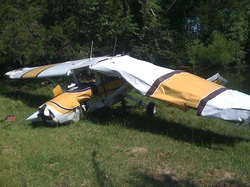
As the story goes, the pilot had been waiting for an instructor to arrive at the airport for his first lesson but got tired of waiting and decided to take the plane up for a spin.  His experience from 20 + years ago apparently made him think he could fly it.  Unfortunately, after getting in the air he had trouble landing.  After two failed attempts to land the plane, on his third attempt he misjudged speed on touchdown and tried to take off again, this time losing lift and the plane spiraled downward.  The plane stalled and fell to the left side of the runway clipping tree branches and falling onto one of my best mamma cows that was minding her own business and simply getting a drink of water from the pond.    The plane fell on the cow, instantly killing her and then settled in about 3 feet of water.  Her 2 month old calf was at her side, but was not injured.  A local airplane mechanic heard the crash, called an ambulance and assisted the injured pilot.
Picture
The hours following the crash were likely memorable for my surviving cattle on the property.  In a matter of minutes my fences were torn down and rescue equipment, police cars and investigators were swarming the property.  The county had already sent a backhoe to bury the cow.  News crews were filming; interviews were taking place with crash witnesses and negative sentiments towards the pilot and his poor judgment began to surface.  Everyone felt bad for the victims…my cow, her orphaned calf and a really nice old Cessna 150. 

For days I tried to catch her orphaned calf.  He simply refused to get anywhere near me or my ranch hand.  When we lured the other cattle to the corral with range cubes, he would not follow, spending his time alone in the woods.  I couldn’t get within 50 yards of him without him running full speed in the opposite direction.   The trauma took its toll.  I held out hope that perhaps he would be adopted by another cow and would get milk from her.  For a few weeks he seemed to be growing and would make it; however I found him lying down and approachable just a short time later.  I took him to the vet but he was anemic and weak.  We tried everything possible to save the calf.  After running up quite a bill with no signs of improvement I took him back to the vet and the staff who knew his story and had been “cheering for the underdog” and they took him into their facility to try and save him.  It was practically intensive care.  The calf seemed to improve slowly, but ultimately he didn’t make it, dying about 10 days later.   The vet speculated that it died from a blood clot that went to his heart from low mobility.  We were all sad to have lost him.  

I called the pilot to attempt to collect restitution for the damage and loss that his actions caused.  After speaking with him I couldn’t help but feel bad for him.  He had no insurance and he had lost his teeth and glasses in the crash.   He had been hospitalized, was embarrassed, lost his plane, etc.  He paid dearly for his poor judgment.   He agreed to pay me a small amount of money for the loss as he was able and sent me a few $100 checks here and there before he moved on.   I never pursued him further. 

 Some say that our cow helped to break the fall of the plane and may have helped the pilot survive the crash acting as a giant shock absorber.  Even considering the poor judgment of the pilot, our cow gave up her life for good reason – she may have saved the man. 

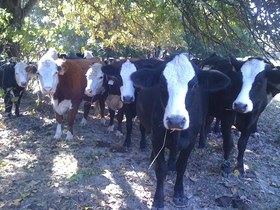
I occasionally see my cows looking up, something unusual for a cow to do.  Perhaps they remember the day the giant metal bird fell from the sky?


Picture
Vic Savelli - FamilyRancher.com

My First Fishing Trip - Updated
 

There are precious few experiences that take place throughout our lives, some so memorable that each and every detail is forever etched in our minds
.

UPDATE:
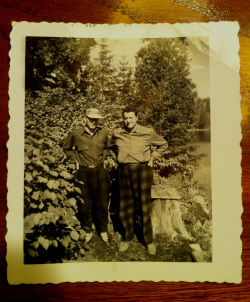
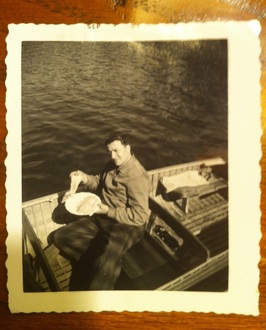
My father passed away at age 89 on February 6th, 2011.  I am pleased that he got to read this story prior to his passing.  When visiting home I looked through some old photos and I discovered a picture of him in his red and black buffalo plaid wool pants that I referenced in this story.  I have included those photos here.

Picture
That's my dad on the right in 1957 fishing in Canada.
My first fishing trip with my father when I was 5 years old was one of those memories that triggered a lifelong passion for fishing and the outdoors and taught me lessons that would serve me well throughout my life.

When I was very young growing up in Pennsylvania I remember my father returning from fishing trips on Lake Erie with coolers full of fresh caught yellow perch, bluegill and bass packed in ice.  After the family adequately complimented the fisherman on his catch, I would stand on a chair next to the sink and watch my father scale the fish and then move them onto newspapers to filet them.  He was very careful to remove all of the bones and yield a nice white-fleshed filet.   He would wrap the heads and guts in the newspaper and turn the fresh filets over to my mother.  She would then dredge the filets in egg and flour and fry them for our family.  We almost always ate the fish the day they were caught.  She would prepare a big salad with fresh lettuce, tomatoes and cucumbers grown in our garden and dressed with olive oil, cider vinegar and lots of garlic.   We always had a loaf of fresh Italian bread from a local wood-fired oven from the “Little Italy” section of our town.   Even if it required a special trip to the grocery store, fresh lemon wedges were a must with this meal. 

Before each fishing trip I would beg my father to take me with him and finally, when I was about 5 years old, he took me on my first trip.  To this day I can remember every detail of that day.  It was a cold and cloudy day with rain threatening.  He wore a pair of red and black wool buffalo plaid pants and insulated red and black rubber boots.  He carried me on his back across a giant puddle to get to one of his fishing spots in an area called “The Lagoons”.  We fished with a bobber and worms and also tried live minnows but didn’t get any bites at that first spot.  Determined for me to catch my first fish, he loaded me on his back and shuttled me back across the puddle, loaded up the car and we drove to a private yacht club across the bay where he had a friend who was the harbormaster and would let us fish from one of the Piers at the marina. 

Being later in the day, it was a little warmer, and the threatening rain subsided.  This time using no bobber, he had me lower the bait down the side of the pier into the water.  As soon as the sinker hit bottom the line slacked up.  He instructed me to reel the line in a few inches until the line was taut.   Almost immediately I got a bite...and another…and another!  I caught my first fish, and the second, and the third and….  As we caught “keepers”, we put them on a stringer that resembled a chain made of giant safety pins.  It wasn’t long before we had at least a dozen fish on the stringer and it was time to go.   When we got home my mother and sisters made a big deal over the catch and my father and I cleaned the fish.   Mom was waiting with the hot oil and lemon wedges.  I can remember clearly how good it felt to be a provider for our family - catching our own food, cleaning it and turning it over to Mom to cook.   And then there is the taste.  Fresh caught fried fish with a lemon wedge squeezed over the crunchy filet and dipped in ketchup is a real treat.   It isn’t difficult to develop a craving for that flavor. 

My first fishing experience at age 5 that combined the fun of fishing with the satisfaction of being a family food provider has never left me.  As I grew older ANY small pond within a couple miles was fair game to try my luck.  I put many miles on my bicycle riding long distances to ponds or lakes to fish - many times returning home with a stringer full.  One time I was fishing a stream for trout and every time I put my line in the water I caught a smallmouth bass.   I returned home with a huge catch of smallmouth bass.  My mother was so impressed she wanted to take a picture and send it to the newspaper - which I thought was a wonderful idea.  Unfortunately, when my father returned from work he informed us that I had caught more than the limit and they were out of season to boot!  As I admit my guilt here, hopefully after 30 years the statute of limitations has now run out protecting me from any charges. 

When I was old enough to drive, my friend and I would store our wading boots and fishing poles in the trunk so we could leave school and go right to the area streams to catch trout and salmon with our fly rods.   We were very good fishermen and frequently harvested fish.  There is a tremendous amount of satisfaction in being a 16 year old boy returning home from an after school fishing trip with three 32” salmon in tow that you caught on a fly rod.  This is especially true if your fishing buddy only caught one! 

Continuing through college and surviving a move to Texas, the passion for fishing and being in the outdoors remains.  When I return to Pennsylvania to visit my family each year I still try to visit the old fishing spots from my youth and relive those memories.   I have since taken my own sons to those spots and many of them are exactly as they were decades ago.  My father is now 89 years old and my mother still fries fresh fish at age 88 and prepares the meal with salad, Italian bread and lemons as she has for over 60 years.  Last time I was in my parent’s house I noticed that my father’s insulated red and black rubber boots were still there in the basement. 

I love fishing and have ever since that first trip at age 5 with my father.   Fishing’s formula for success is a cycle of skill, timing, luck and patience that translates into an ultimate payoff with the bounty of the catch or “getting skunked”.  Whether in my media executive roles, ranching operations or family life, this same cycle of skill combined with timing and luck has ultimately led to my successes and failures.  Sometimes it takes failing so that you can fine tune your skills and appreciate the times when they’re  “biting” and you can enjoy life’s “crispy filets” with a squeeze of lemon. 

Picture
Showing off some of his fresh filets
 
 
Picture
Vic Savelli - FamilyRancher.com
Salvage collected since pre-electricity era finds new home via Craigslist
.

What started as a neat way to use the internet to get rid of a bunch of wood and jars started feeling like a humanitarian effort that was making a difference in the community.

Picture
Last year my wife and I purchased a piece of land about 80 miles east of Dallas in Wood County, just north of the small community of Mineola. While only about an hour and a half east of Dallas, the area is quite a different environment than what you find in Dallas. Known as the “Gateway to the Pines,” Wood County is the northwestern most part of the great Pine forest that extends all the way to the Florida coast. The soils are deep sand, large hickory, pine, and oak trees are abundant, and cold water springs are everywhere. We purchased the land from the estate of a gentleman that I would describe as the “original recycler.”

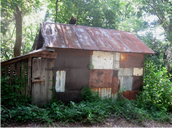
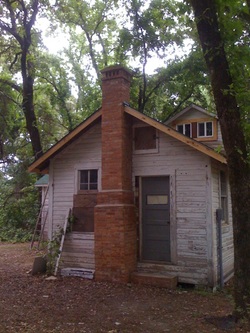
A product of the depression, neighbors told me that he was a very frugal man that raised a large family on the property and over a period of more than 50 years never had a trash service. He never threw anything away! Every item that no longer was used in its original form was disassembled, flattened, sorted, or buried, depending on what it was. In addition to the frame home where he raised his family, there are seven other structures on the property ranging from hay barns, workshops, and storage sheds. These structures all have one thing in common: They were constructed with lumber and materials that were from old buildings and salvage. These outbuildings also contained more salvaged materials waiting for a rebirth. One shed is completely sided with metal from old family refrigerators, oil cans, tin, and whatever else was available. The entire exterior of another is sided with multicolored roofing shingles salvaged from when he was a roofer decades earlier. It seemed appropriate that as we were cleaning the buildings and preparing to convert his old woodworking shop into a cottage that we let the spirit of the man and his conservative nature continue on. I didn’t realize that my solution would have such a profound effect on my understanding of what it really means to be a member of a community and how to recycle

Give it away!
What do you do with four buildings full of scraps of wood, metal, and a thousand jars that have not been touched in decades? Do I burn the wood? Recycle the glass? My answer came with the Craigslist free store. I’ll give it away! While my intention was to get rid of the materials in an environmentally responsible way, I would ultimately learn that I would receive back much more than I gave through the people I met and the stories that they would share with me. I placed an ad in the “free” section of the Tyler/East Texas Craigslist for “free jars and wood.” How do you accurately describe 50 years worth of wood scraps? In the ad I mentioned that the wood was suitable for building birdhouses or small construction projects, the jars were good for canning etc. As expected, I immediately started receiving emails, calls, and texts. I had plenty to go around and everyone was welcome to take whatever they wanted, so I gave them each directions and set up times for them to come over.

Who shops the Craigslist “free” store?

I didn’t know what to expect from the people who would respond to my listing. I guess I had a bit of concern over security and wondered if they would return and break in, vandalize, or murder me! One word that accurately characterizes the visitors is “resourceful.” They weren’t looking for hand outs, they were using available resources to save money, improve their lives, or because they had a deeply rooted philosophical belief in sharing across their community. Several had posted their own belongings on the “free” store for others to have. While I found each person's story interesting, I’ll focus on the three that made the biggest impression on me.
Pay it forward

The first visitor drove from a small community about 10 miles further East in Hawkins, Texas. She was a middle aged woman interested in both the wood and jars. Upon entering the workshop she let out an “Oh my!” when she saw the quantity of wood stuffed into the building. She backed her old pickup truck up and I helped load it with the wood she chose. She talked the entire time about her life, her family, and why she liked the Craigslist free store. I later learned that everyone who answered the ad felt compelled to give me the “why” behind their “shopping” the free store. This first visitor was surprisingly candid about her life. She had been dealing with health problems for years and lived a simple life out in the country. She occupied herself by building craft items and gardening. She had food allergies that caused her to can and preserve most of her own food. She looked at the Craigslist free store often and liked the idea of giving and receiving things through community. She told me that she answered one ad for an individual who had a deer hunting stand that needed to be moved quickly because he had lost his hunting lease and was about to lose the stand to the land owner. He wanted someone else to have it for free rather than let the landowner who cancelled his lease have it. She went and picked it up, put it on her property and then called the man back and told him he had unlimited access to her property to hunt from it whenever he wanted to. I thought to myself, Wow, what a nice gesture!

After the pickup truck was loaded, I noticed that it did not put a noticeable dent in the quantity of wood I still had and that I would be at this a while. She said she would drop the wood and come back for the jars. About an hour later she returned and I took her to the cellar where she had first crack at what I would estimate to be well over 1,000 jars dating decades back in time. I had gone through them previously and already held back some of the old mason jars, pottery crocks, and Superman Peter Pan jars that I thought were neat and collectable. We filled the bed of her truck with jars, the entire time with her explaining what type of food she would place in the different types of jars.

I was about to send her on her way with a wave, but she hesitated a moment and went into the cab of her pickup and retrieved a small mason jar. She said that she had something for me. She qualified it by saying that if I didn’t feel comfortable taking it that she understood but that she wanted to give me something she thought could be helpful to me and my family. The jar was filled with a deep purple liquid stuffed with small purple berries. She explained that because of her allergies, she is unable to take antibiotics and must rely on home remedies. This was one of her most precious resources – her “Elderberry tincture.”

This was at the height of the Swine Flu scare and she said this was more effective than Tamiflu at lessening the effects of swine flu, and if taken daily, it would help keep me from getting it. When I asked her what the recipe was, she said it was “Elderberries that had been soaking in Vodka for more than a month.” Her prescription was to take a tablespoon a day and to crush the berries in her mouth, but not to chew the seeds because they had small amounts of arsenic in them. She quickly responded to my blank expression by saying that it is a very small amount of arsenic and that apple seeds have the same thing. She promised me she wasn’t going to poison me. She went on to say that people who get the flu should increase the dose to 3 tablespoons per day.

I took the Elixir from her, but was a bit skeptical. Later that day I researched it on the internet and learned that on average, elderberry tincture reduced swine flu symptoms to three days versus Tamiflu that took five to six days. As it turned out, elderberry juice was all the rage on the World Wide Web. I was rejuvenated with her talk of a supportive community and her caring gestures. I couldn’t wait for the next customer.

Unemployed

My next visitors were a couple that I would estimate to be in their late 40s. She was a school teacher and he was an unemployed carpenter. They too were from a small community in the area. He had been out of work for the past eight months and had been struggling to get by. He said that he was tired of sitting home doing nothing and wanted to try and redo the kitchen for his wife but had no financial resources to afford the materials. He thought that perhaps the wood I advertised could give him a start. They methodically sorted through the stacks of wood. He took his time and identified each type of wood as he sifted through it – he knew his wood varieties. When he noticed the large number of 1 x 4 pine boards, he got the idea that if he routed the sides of them into a tongue and groove board that he could install new pine wood floors in her kitchen. She lit up and the pace of their search intensified, locating every 1 x 4 board around. They stopped when they thought they had enough. They also took some drawer faces that were left over from desks and cabinets that had long ago been dissembled. They were both noticeably happier. He had a smile on his face, perhaps thinking about how he could be useful again and give something to his wife in his unemployment. She was excited at the prospect of a new hardwood floor. How could I have ever thought of just burning all this old wood?

Recovery

The second weekend I had a visitor that was a well-heeled older gentleman that drove up alone in a late model sedan. He was interested in looking at the wood and focused on the small thin plywood and pieces of trim. Once I knew what he wanted, I helped him locate more. As with the others, the need to tell me the “why” behind his use of the Craigslist free store hit him. He explained that his wife of many years had been diagnosed with cancer a few months back and she had several surgeries since. She found it difficult to get around, so to occupy her time and take her mind off her illness, he encouraged her to make bird houses, which she enjoyed doing. She could not stand or get around much, so he wanted small pieces of wood that did not need to be cut that she could put together and work on easily. He said that with all the medical bills, their finances were strained. There is something about hearing his story and visualizing his wife in my mind that made me take special care with the wood I chose for her, searching for just the right size pieces that would be easy for her to work with or the interesting types of wood to give her variety and perhaps joy. When he left, I felt an overwhelming emotional and melancholy feeling. What started as a neat way to use the internet to get rid of a bunch of wood and jars started feeling like a humanitarian effort that was making a difference in the community. It felt really good.

I continued posting “free wood and jars” on the free store for many weeks and only after more than a dozen visitors did I make a noticeable dent in my inventory. I like to think that the former owner of the property who went to great lengths to save and store each item would appreciate the practical end use that met his possessions. The experience ended up being an almost surreal blending of the old and the new. Salvage collected since before electricity found a new home through the internet. Nice job, Craig!

Oh, and I never did get Swine Flu!


Salmonella or no, real East Texas eggs are the way to go!
Picture
Vic Savelli - Family Rancher
— Last week I ate my first “real egg.” Now I’m sure I have eaten thousands of eggs over my lifetime, but what made last week’s eggs different is that they were the first that I personally harvested from under hens that had been raised running around a grassy pasture and eating insects and seeds from the ground -- “free range” as they are called.

While I’m a Dallas resident, my wife and I own land in East Texas outside of Mineola. The chickens in question are lovingly cared for by the couple that owns the property next to ours. We have to slow down frequently to avoid hitting their chickens as we drive past their house on this quiet, dead end country road.

Last week (and prior to the big egg recall) I asked if I could try some of the eggs. Over the past few years our family has tried to focus more on eating locally grown food and our land has allowed us to fill our freezer with the fish we caught, venison we harvested, and natural beef that we raised. We have traded and shared what we produce with our neighbors and received sweet potatoes, corn, beans, tomatoes, and other items from their gardens. The eggs seemed like the next natural step to take.

Not knowing much about chickens, I learned that asking a couple that own dozens of chickens for a few eggs is like asking a bar owner for a bottle cap. Hens are proficient at laying eggs and typically lay one per day, they told me. A couple dozen hens could lay 10-14 dozens per week. That’s over 8,500 eggs a year -- which is a lot of egg salad for a household of 2.

I can now tell you firsthand that there are big differences between a grocery store factory egg and a natural egg in taste and consistency. The contrast is as big as the difference between a homegrown tomato versus a grocery store tomato or a juicy, ripe peach right off the tree versus a flavorless, engineered peach. While they look perfect at the store, when you bite into one you have a hard time differentiating the flesh of the peach from the pit! But I’ll return to the egg taste later.

If there is such a thing as a happy chicken, our neighbors house is likely where you would find it. The owners are quite fond of their birds and they take the time to cater to the things that are important to chickens: When the chicks are young they have them in a large wire pen open to the ground that they move every few days to expose the chicks to a new patch of grass and insects. This gives the added benefit of eliminating the need to mow, fertilize, or use pesticides on their lawn. Once the chicks get larger they are released to roam free.

Our neighbors always seem to be buying more chicks and raising them. I suspect this is due to predators that also seem to be quite fond of chicken. Coyotes, chicken hawks, bobcats, and an occasional mountain lion keep them continually on alert. As we were walking back to the barn among a recently freed group of teenage chickens “going through their ugly stage,” he commented that this last group of chicks ended up being mostly roosters. He said that they give the roosters and many of their hen’s eggs to needy families that live in the area.

As we approached the egg-laying boxes, you could immediately see that there were eggs sitting atop tufts of hay everywhere. Only a few hens were actually sitting on the eggs. Feathers flew as we reached into their nests to collect the eggs. He suggested I take a white egg, a tan egg, and a brown egg. When I asked him the difference, he said “absolutely nothing.” There is a lot of misinformation about egg color and health benefits associated with it. I recently read an article from a supposedly reputable source that said that egg color was related to the color or breed of the hen. When I asked him about it he laughed at me, saying it’s okay to pay a little extra for brown eggs at the grocery store, but do it because you like the color, not because they are better for you.

After we collected the eggs, we washed them off. One looked appropriately egg shaped. One was longer and a bit pear shaped and the third, the white one, was smaller than you would ever see in a store. As I looked at them I was thinking to myself that I was seeing the real thing … perfect eggs as nature intended. He told me not to refrigerate them and to put them on the counter until I ate them, saying that refrigerating them changed the consistency of the egg white and yolk and that nature had given them the perfect packaging. As I was walking towards my truck, his wife invited me to go and collect eggs anytime.

I should point out that online research suggests that farm fresh eggs that are organic and not exposed to chemicals in their feed and physical environment are generally safe unrefrigerated. Some say that you should not wash the eggs if you are going to store them on the counter, which seems counterintuitive. In many countries, eggs are not refrigerated and purchased off of grocery store shelves instead of under refrigeration. Most sources recommend that store bought eggs stay refrigerated at 40 degrees or cooler until used. All of the dos and don’ts are related to the potential to grow Salmonella bacteria inside the egg. I am finding that the articles suggest that the risk with Salmonella is significantly higher with factory farm eggs than with small farm eggs such as my neighbor is raising. This reminds me of a similar issue that I have read about suggesting that small farm grass fed beef has lower risk for e-coli bacteria than feedlot beef fed large amounts of corn. I guess it’s the trade-off that modern agriculture has made.

The following morning, I took out the frying pan and put a small amount of butter in the pan. I added a bit of olive oil to keep the butter from burning and satisfy my Italian upbringing. I cracked the eggs one at a time on the rim of the pan. When they cracked open, the egg white and yolk hit the pan and spread quickly across the butter with a consistency that was more watery than with a grocery store egg. I had to tip the pan to keep the egg from covering the entire bottom. I added the other egg and put a bit of salt and pepper on it. After a few moments I flipped it, choosing “over easy,” but was careful not to overcook it because I wanted to taste the yolk.

Once the eggs cooked, I took my spatula and carefully placed them on a hand thrown plate my wife had bought from the town potter who lives and works a few miles up the road. I added a couple pieces of diagonally cut toast and poured freshly brewed coffee roasted at the local coffee shop downtown into a mug also made by the Town Potter. I sliced a fresh peach that I had purchased a day earlier from a farmer up the road. I sat down at the table with my eggs and coffee facing the window that looks out onto our pastures where our cattle were grazing. I believe I was experiencing what Denny’s calls “The Country Breakfast.”

I took a bite of my first real egg.

It was lighter and less rubbery than eggs can sometimes get. The white was whiter, the yolk was darker and the complexity of the flavor had me thinking that I would forever prefer it over the thousands of other eggs that I had consumed. All of the proteins my neighbors’ hen consumed by free ranging in their yard produced a very flavorful egg indeed!

On my way back to Dallas that afternoon I passed a small handwritten sign in front of a house on Hwy. 80 advertising “fresh eggs, $2.” It was right next to a similar sign in their yard advertising “notary.” While double what you would pay at the grocery store for a dozen eggs, it seems that it would be well worth the money, with the price difference being less than that of a bottle of water at a convenience store.

The next morning I read about the egg recall due to Salmonella contamination and that a half a billion eggs were being recalled. My neighbors’ chickens now have a new weekend predator.